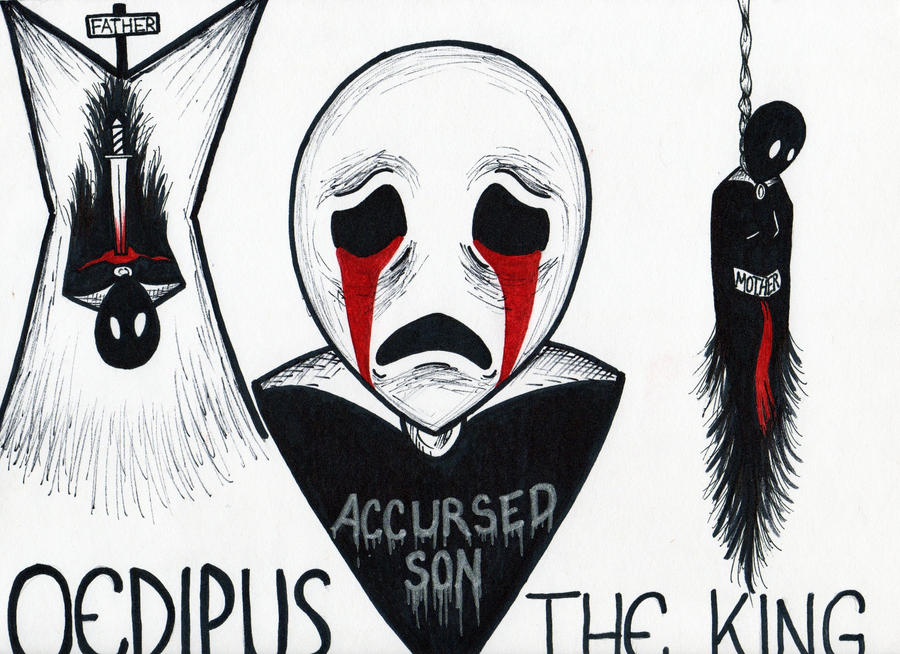
Creon is now the ruler of Thebes, but how will he do as a king?
In the beginning of the play, Oedipus puts a lot of trust into Creon. Oedipus sends him to Delphi to learn how to save Thebes. This shows that Creon is respected and capable enough to do important tasks. Creon genuinely wants to help people, and compared to Oedipus, Creon can better control his anger. When Oedipus accuses him of treachery, Creon says, “Hear me out, then judge me on the facts” (609). Creon thinks rationally which will later benefit him as a king. When Oedipus is no longer a king, Creon shows compassion towards Oedipus. He tells him that “I haven’t come to mock you, Oedipus, or to criticize your former failings” (1557-1558).
However, Creon still has flaws. At the end of the play, Creon tells Oedipus that he “tries to say what [he] means” (1671), but this statement seems to be proven false. Earlier, he tells Oedipus that being a king is “hardly to [his] taste” (662), but Creon hastily replaces Oedipus’s spot as king. Creon also seems to be secretive at times. Unlike Oedipus, Creon wanted to tell the news of the oracle to Oedipus in private. Creon separates himself with the people of Thebes and prefers to keep things confidential. This leads to question of how Creon will rule as a king. He exhibits some quality traits that will make him a good ruler, and he does not try to defy the gods — learning off of Oedipus’s mistake. (He will only exile Oedipus if the gods approve). But the fact that Creon says he tries to always tell the truth may foreshadow that he actually does not.